


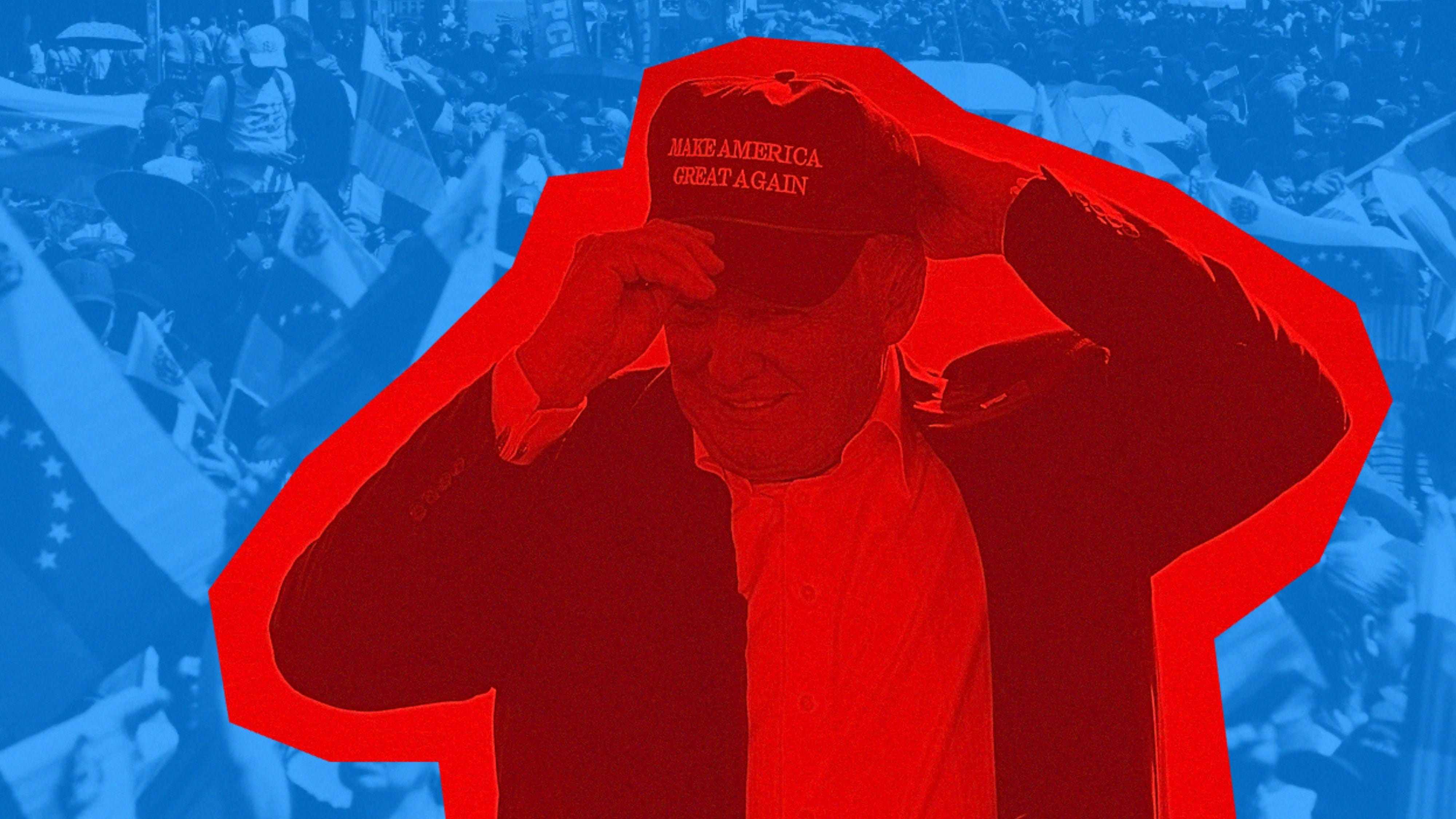
Both the New York Times and the Washington Post knew about the Trump regime’s attack on Venezuela beforehand, but they agreed to keep the plan secret to protect the safety of American troops, according to the Semafor news outlet, citing anonymous sources.
This is not surprising. In fact, it’s a common practice when it comes to military operations.
The issue came to a head during World War II when the Chicago Tribune revealed that the U.S. military had knowledge of Japan’s attack plans before the Battle of Midway. Although the story didn’t explicitly state that the U.S. had cracked Japan’s naval code, that conclusion was both logical and accurate. President Franklin Roosevelt was so angry that his government tried to charge Tribune journalists with violating the Espionage Act, but a grand jury declined to indict them. Meanwhile, the Japanese apparently overlooked the Tribune report, making only minor changes in their code for the remainder of the war. So much for the power of the press.
In a much more recent case, The Atlantic’s Jeffrey Goldberg was accidentally added to a Signal chat in which Defense Secretary Pete Hegseth and others discussed a planned attack on Houthi rebels in Yemen last March. Goldberg wrote about it, but as he later explained, “we withheld specific information related to weapons and to the timing of attacks that we found in certain texts. As a general rule, we do not publish information about military operations if that information could possibly jeopardize the lives of U.S. personnel.”
But after claims “by numerous administration officials that we are lying about the content of the Signal texts,” The Atlantic decided to publish the full conversation – with the exception of the name of a CIA officer who was cited in the texts.
The media’s general deference to the U.S. military’s need for operational secrecy is likely to be tested in coming months and years. After all, Trump is perverting the mission of the military far beyond legitimate national security.
In addition to the attack on Venezuela, the Trump regime in the last two weeks has sent missiles and drones into Nigeria in supposed defense of Christians and has threatened to attack Iran in supposed defense of protesters there. In the wake of the Venezuela attack, the regime has made threatening statements about Cuba, Colombia, Mexico, and Danish-held Greenland.
Trump is also using the military as a political weapon against American cities. Last week, he backed off in Chicago, Portland, and Los Angeles after a defeat in the Supreme Court. But at the same time, he threatened to “come back, perhaps in a much different and stronger form,” raising fears he will invoke the Insurrection Act, which gives the president broad powers to use the military domestically.
The press has to ask itself: Is it still in the public interest for journalists to keep secrets about Trump’s anti-democratic use of the military? The answer isn’t an easy one, and it may well depend on the situation at hand. But the question will eventually become unavoidable.
Five other thoughts on the Venezuela attack
It’s illegal: Trump’s abduction of Venezuela’s president and the killings of an estimated 80 people in the raid were violations of both U.S. and international law. He didn’t obtain congressional approval, as is required in this country. Major media need to spend more time explaining how the process of going to war is supposed to work in a constitutional democracy. The New York Times has done good work in this regard, both in an editorial calling Trump’s action “illegal” and in a news story questioning whether it’s lawful for Trump to “run” Venezuela.
WaPo cheers on Trump: While NYT’s editorial board denounced the attack, the Washington Post’s board demonstrated why I and many others have given up on the news outlet owned by Trump-allied oligarch Jeff Bezos. According to WaPo’s rah-rah editorial, Trump’s illegal attack was “a major victory for American interests.”
Code talkers: When the news media say the United States’ strongarm approach to Venezuela “raises legal questions,“ that’s code for “the president is violating the law, but no one is going to stop him.”
Leaky logic: It’s ridiculous for the Trump regime to say it didn’t consult Congress because of worries about lawmakers leaking information. No. 1, it’s the law, and members of Congress know their duty to keep secrets. No. 2, the regime that’s so worried about leaks is the same regime that accidentally shared attack plans with a reporter and then punished no one for it.
An efficient killing machine: There’s a tendency of major media to marvel at the skill of the U.S. military and therefore cast even their misguided assignments in positive terms. One example was a social post by Rachael Bade, the former Politico reporter who is now partnering in an online show with former presidential liar Sean Spicer. “Agree or disagree with the merits of the operation,” Bade wrote, “you can’t help but be in awe of the US military might described by General [Dan] Caine.” Yes, our military is outstanding, which is precisely what makes it so dangerous when it’s used to promote authoritarianism and conquest.
Advertise in this newsletter
Do you or your company want to support COURIER’s mission and showcase your products or services to an aligned audience of 190,000+ subscribers at the same time? Contact advertising@couriernewsroom.com for more information.
Support COURIER’s Journalism
Democracy dies behind a paywall, so our journalism is and will always be free to our readers.
But to be able to make that commitment, we need support from folks like you who believe in our mission and support our unique model.
A bit different outcome for the sainted US military compared to the total flop of attempting to silence Houthi missile attacks in the Gulf region, by all accounts a miserable failure.
And there's even talk/rumor that the "extraction" of the Maduros was a pre-arranged "negotiated" snatch, in order to minimize bloodshed on all sides...anything concerning the trump regime's decision-making is plausible, these days.
Here (well, among so much else about the detestable, psychotic criminal installed as our President) is what worries me deeply: Trump, by threatening to invade Greenland is looking to destroy NATO under order from his owner, Putin.
Here are the facts: Greenland is an autonomous country within the Kingdom of Denmark, a founding member of NATO. Under Article 5, the organization's core principal for collective defense, the other member states are bound by law to defend Greenland if it were to be invaded. Let's face it, however, it is not feasible to think of the nations of Europe going to war with America (although that is Putin's wet dream). On the other hand, if the European nations are reduced to doing nothing except for making limp-wristed protestations, NATO will be seen as worthless. Either scenario represents a clear victory for the forces of evil.
So what can we do? Can we depend upon our military leaders refusing to obey illegal orders to invade Greenland? That's entirely doubtful based on their recent complicity in committing cold-blooded murder in the Caribbean and in Venezuela. Well, what then? Can we count on the Members of Congress removing Trump by impeachment? Seriously - that bunch of mostly self-serving cowards?
The price we are paying for the willful ignorance of the 77 million who voted for Trump and the indolence of all those other millions who could not be bothered to vote is incalculable.
What will it take to rouse us out of our lethargy?